These recommendations are current as of 19 November 2026.
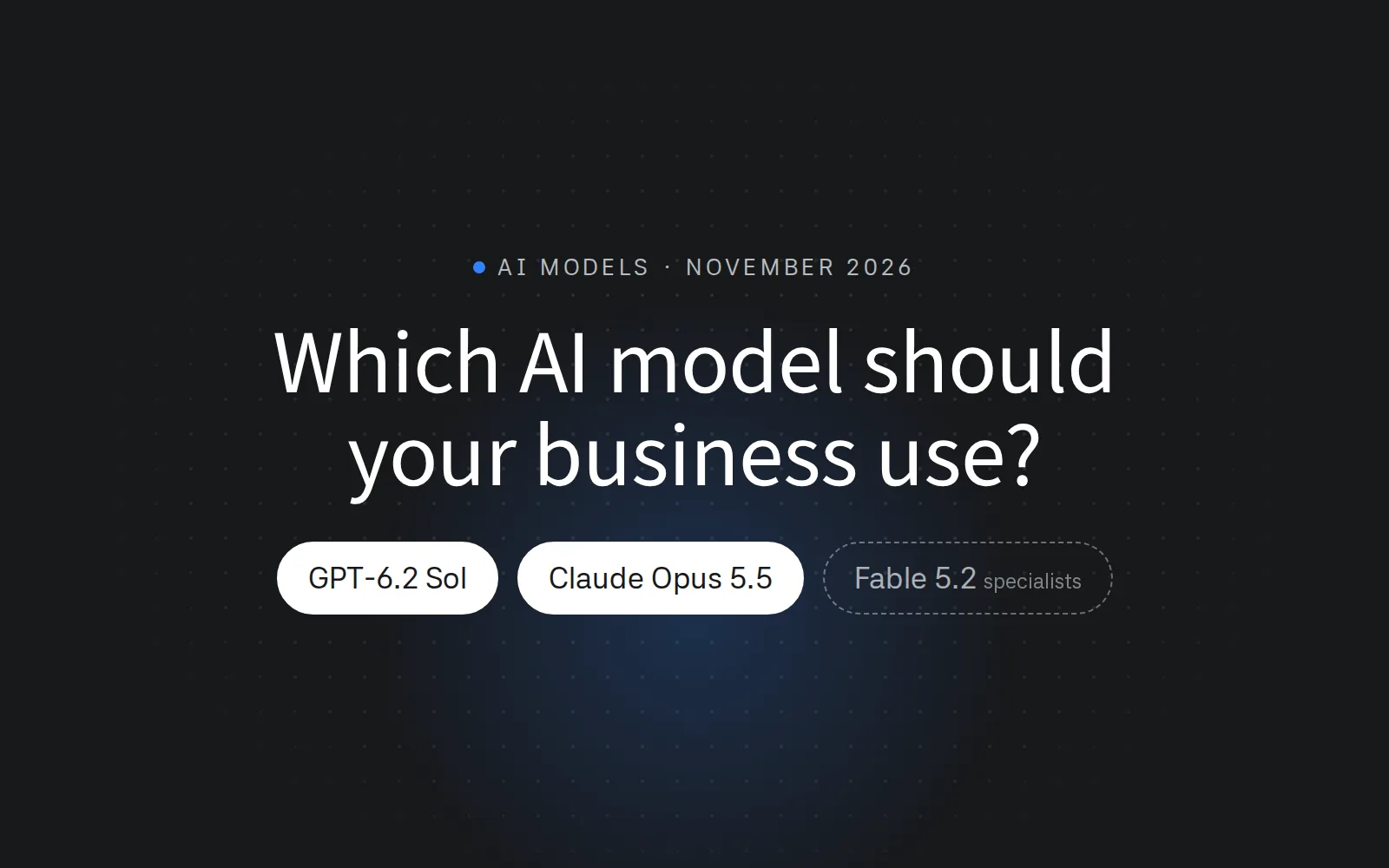
For most business work, I'd start with GPT-6.1 Sol, GPT-6.2 Sol or Claude Opus 5.5. Pick one that's available in your approved AI app and leave the effort setting at its default to begin with.
You can make that choice without comparing every model on the market. Take a job your team did last week and see how well the model handles it using the same information a colleague would have needed.
Give your everyday model a real job
Imagine a customer has asked about a change you discussed last month. Give the AI their email, the decision from the last meeting and the current plan. Ask it to draft a reply, identify anything that still needs a decision and point you to the source for each commitment. Check the draft before you send it.
That's the kind of work where I favour a capable everyday model. In one conversation it needs to find the relevant detail, take the customer's situation into account and write something you can use.
If your app has an effort control, try high effort for harder work, such as comparing several proposals that use different assumptions. Give it a clear question and the right sources first. Then compare the result with what you got at default effort. The extra time is worthwhile when it surfaces a trade-off you'd have missed or gives you a conclusion you can verify more easily.
Save Fable for exceptional technical work
Claude Fable 5.2 is an option for experienced technical teams tackling an unusually hard architecture, design or orchestration problem. Think about replacing a core system while several teams still rely on it. If the everyday model keeps overlooking dependencies or treating a risky migration step as straightforward, use Fable to work through the alternatives and challenge the plan.
Most coding work can stay with your everyday model. The technical team still owns the design, testing and rollout.
Let your AI app suggest smaller models for specific jobs
A harness is the app that runs the model and gives it access to tools and information. Some harnesses can also hand a piece of work to a second model, called a sub-agent. If your app supports delegation, it may suggest or assign a smaller model such as Claude Haiku 5.5 for a task with a clear input and output.
For example, the lead model could ask a smaller model to extract dates and proposed actions from several sets of meeting notes. The lead model then compares the results, checks which actions were agreed and prepares the summary. You review it and decide what to share or record.
You can keep the same lead model throughout. Give each agent access to the information its task requires, and keep approval for sending messages or changing records with the responsible person.
Try it on something you already do
Pick one recurring task, give the model an example of a good result and try it with fresh material. Include the time you spend checking and correcting the answer when you judge whether it helped.
Read our practical guide to using AI well at work.
Anthropic's model reference · Claude's guide to effort and thinking settings